mystery of
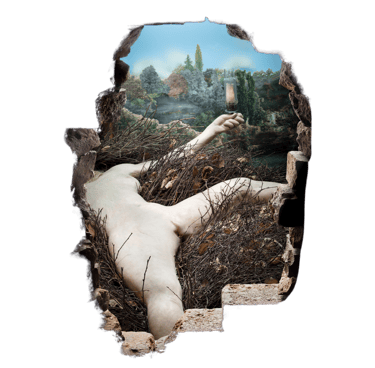
“The gaslight flickers... the body lit precisely, exposed as both artifice and truth.”


THE ORDER OF OPERATIONS
The following mythological and ritual terms detail the symbolic significance of transfiguration.
(1) Hover over an image to reveal the button.
(2) Click the button to read the poem snippet + the term.
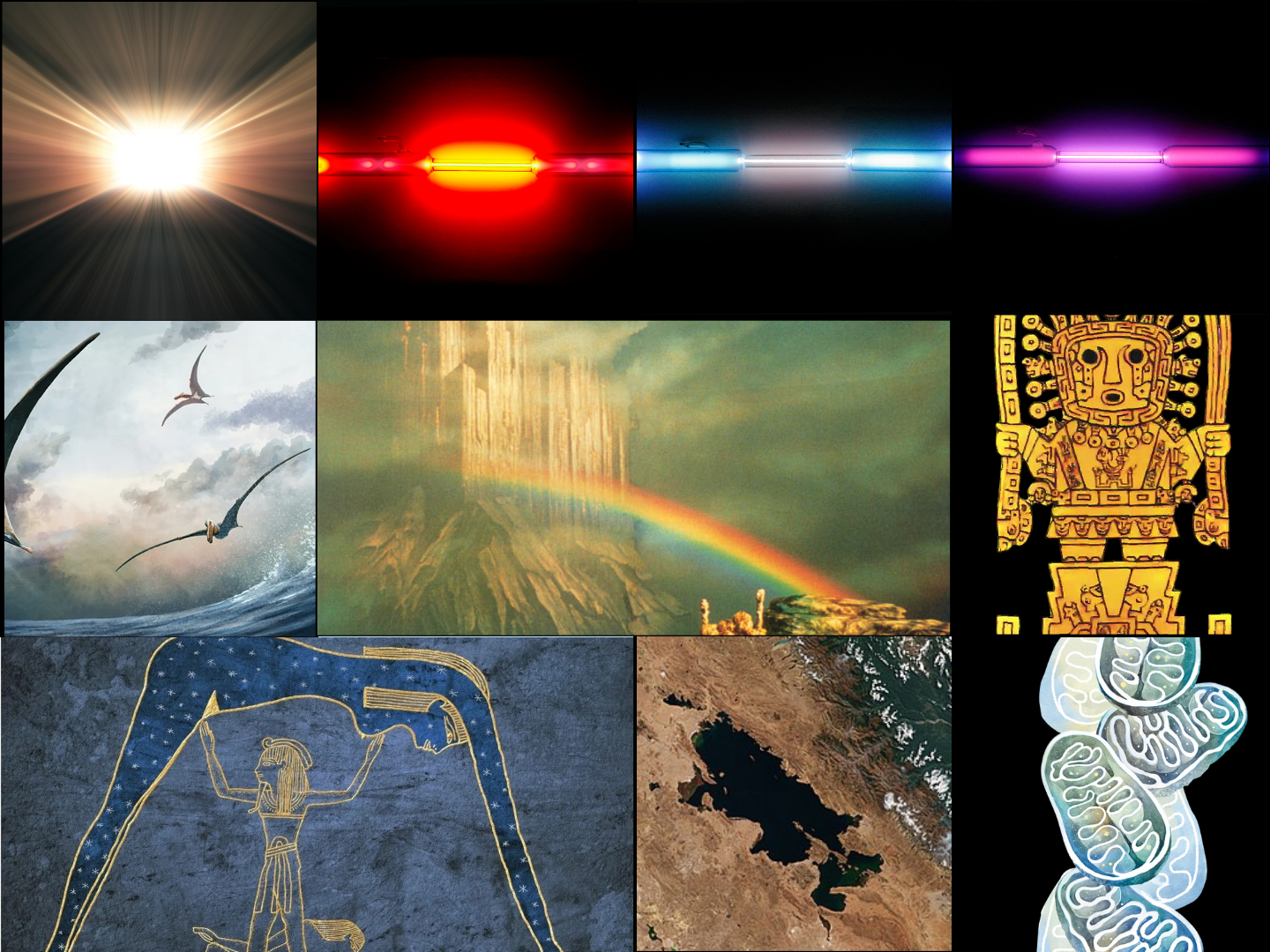
Lake Titicaca
a large freshwater lake in the Andes mountains on the border of Bolivia and Peru. It is often called the highest navigable lake in the world. Titicaca is the largest lake in South America, both in terms of the volume of water and surface area.
Nut
Nut (Ancient Egyptian: Nwt), also known by various other transcriptions, is the goddess of the sky, stars, cosmos, mothers, astronomy, and the universe in the ancient Egyptian religion. Egyptian religion is unique in the genders of its deities of Earth and Sky. Nut swallowed the Sun in the evening as the sky goddess and gave birth to it again in the morning. She was seen as a star-covered nude woman arching over the Earth or as a cow. She was depicted wearing the water-pot sign (nw) that identifies her.
Bifröst Bridge
a rainbow bridge in Norse mythology that connects the realms of the gods, Asgard, and humankind, Midgard. Guarded by the god Heimdall, it is the route for the gods to travel and was built by them to span the realms. According to legend, it will be destroyed at Ragnarok during a battle between the gods and giants. The bridge served as a way for the gods to travel between their realm of Asgard and the mortal world of Midgard.
Inti
Inti (Quechua: inti, lit. 'sun') is the ancient Inca sun god. He is revered as the national patron of the Inca state. Although most consider Inti the sun god, he is more appropriately viewed as a cluster of solar aspects, since the Inca divided his identity according to the stages of the sun. Worshiped as a patron deity of the Inca Empire, Pachacuti is often linked to the origin and expansion of the Inca Sun Cult. The most common belief was that Inti was born of Viracocha, who had many titles, chief among them being the God of Creation.
The word inti is not of Quechua origin but a loanword from Puquina. Borrowing from Puquina explains why historically unrelated languages such as Quechua, Aymara and Mapuche have similar words for the Sun. Similitudes are not only linguistic but also symbolically as in Mapuche and Central Andean cosmology the Sun (Inti/Antu) and the Moon (Killa/Cuyen) are spouses.
Covalent
A covalent bond is a chemical bond that involves the sharing of electrons to form electron pairs between atoms. These electron pairs are known as shared pairs or bonding pairs. The stable balance of attractive and repulsive forces between atoms, when they share electrons, is known as covalent bonding.
Pterosaurs
Pterosaurs are the earliest vertebrates known to have evolved powered flight. Their wings were formed by a membrane of skin, muscle, and other tissues stretching from the ankles to a dramatically lengthened fourth finger.
Neon, Krypton, Argon
The noble gases includes helium, neon, argon, krypton, xenon, and radon. Originally these elements were called inert gases, or rare gases.
The phrase noble gas comes from the German world Edelgas, used first in 1898 by Hugo Erdmann, the same year radon was first identified. Krypton gets its name from the Greek word “Kryptos”, which means “the hidden one.” Neon signs only contain pure neon if they are orange, otherwise they contain other gases
Emily Roebling
Emily Roebling was the cheif engineer responsible for the completion of the Brooklyn Bride. Initially, her husband was assigned as the chief engineer of the Brooklyn Bridge's construction. However, Washington developed decompression sickness, which was known at the time as "caisson disease", by going to underwater depths to study the placement of caissons and not rising at the proper speed. It affected him so severely that he became bedridden. As the only person to visit her husband during his sickness, Emily Roebling relayed information from Washington to his assistants and reported to him the progress of work on the bridge. For the decade after Washington was confined to his sickbed, Emily took over the completion of the Brooklyn Bridge, including day-to-day supervision and project management, dealing with politicians, competing engineers, and all those associated with work on the bridge.
The Brooklyn Bridge was completed in 1883. In advance of the official opening, carrying a rooster as a sign of victory, Emily Roebling was the first to cross the bridge by carriage.
Mitchocondria
organelles within eukaryotic cells, often called the "powerhouses of the cell," because they generate most of the cell's energy in the form of ATP through a process called cellular respiration. They are also involved in other critical functions like regulating calcium levels, storing calcium ions, initiating programmed cell death (apoptosis), and are involved in various metabolic pathways.


📍 YOU ARE HERE
Ready-Made Poems
Exploring modernity through poetry and visual art.
Sara Cahill Marron Poetry Est. 2013
© 2025. All rights reserved.